Project Redwood 2025 Annual Meeting
Palo Alto, October 8th to 9th, 2025
Meeting Overview
More than 80 Project Redwood members and guests, including four grantee leaders, gathered in Palo Alto for the 2025 Annual Meeting. Thirty-four GSB classes were represented, underscoring the breadth of alumni engagement across generations.
The events kicked off on Wednesday evening with a Pizza & Pinot social hosted by Board Member Gail Schulze (MBA ’80), who welcomed more than 60 attendees to her home.
The Annual Meeting on Thursday was held at the Law Offices of Morrison and Foerster.
Thursday Morning Session
Rick Agresta (MBA ’80) opened the meeting, joined by Co-Chairs Brad Smith (MBA ’95) and Mike Fitzgerald (MBA ’90). Brad encouraged participants to reflect on three questions shaping Project Redwood’s future direction:
- Should Project Redwood move forward with trust-based, multi-year grants—and why?
- How can we strengthen partnerships with other nonprofits, and which merit focus?
- Should Project Redwood expand funding sources beyond GSB alumni?
Icebreaker
An energetic “get-to-know-you” activity led by Eleanor Keare (MBA ’95) brought attendees out of their seats, helping everyone connect before the program began.
Fireside Chat: A Conversation with Doug Galen
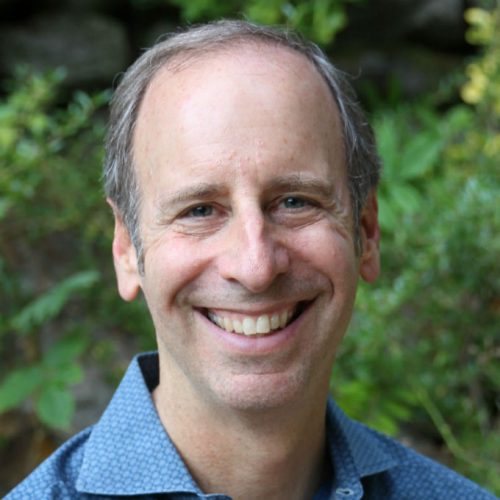
Gelila Bekele (MBA ’21) moderated a thought-provoking fireside chat with Doug Galen, GSB lecturer in entrepreneurship and co-founder of Rippleworks. Galen described Rippleworks’ innovative model—pairing funding and management expertise to help social ventures scale sustainably. In most cases, Rippleworks provides consultative guidance while targeted grants to strengthen leadership and operations beyond the advisory assistance occur less frequently.
Click here to watch the recording of the Fireside Chat.
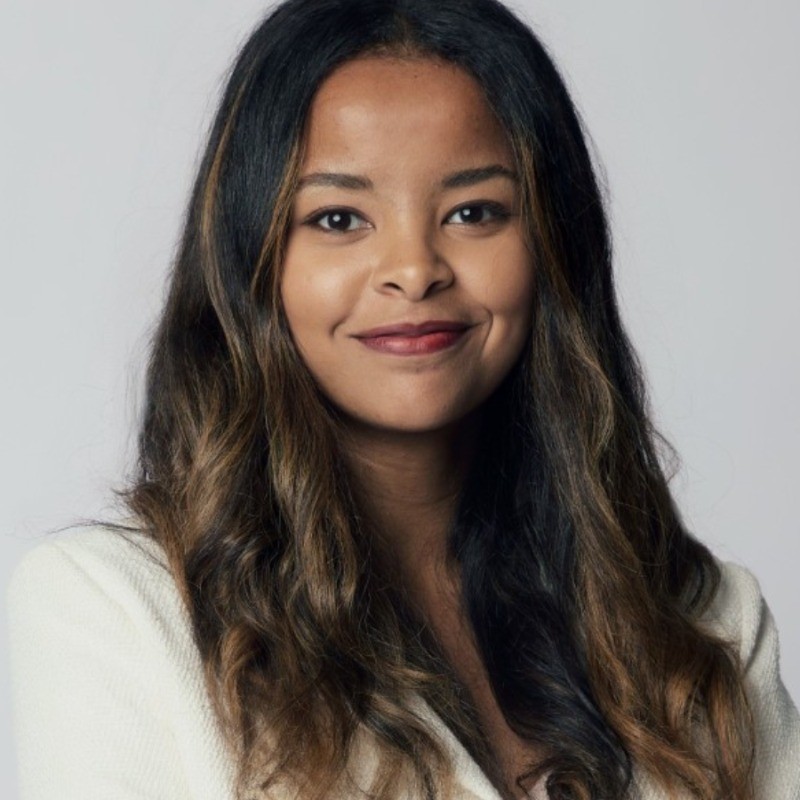
Why Project Redwood
Mike Fitzgerald (MBA ‘90) highlighted Project Redwood’s journey: over $6.5 million awarded through 223 grants to 82 organizations, reaching more than one million lives across 33 countries since the organization’s founding.
Grantee Panel: Growing Impact in Social Innovation
Grantee Panel: Growing Impact in Social Innovation
Moderated by Ray King (MBA ’80), this inspiring session featured leaders from four grantees:
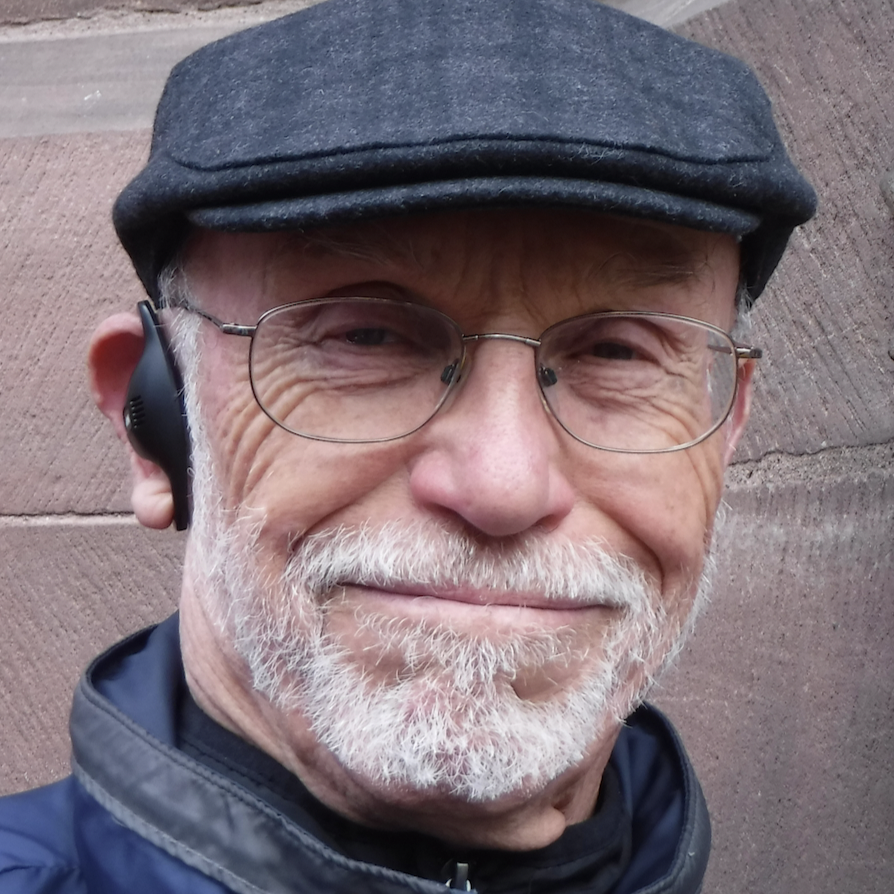
David Sowerwine
MBA ’72, Founder, President, and CFO at Looma Education
(Nepal)

Toyin Ayanfodun
Founder and Executive Director at Tomorrow’s Leaders NYC
(USA)

Gabrielle Fondiller
MSx ’16, Co-Founder and Executive Director at Hatua
(Kenya)
Adriane Armstrong
MBA ’09
Senior Advisor at Juma (USA)
Ray King
MBA ’80
Project Redwood Board Member
Moderator
- Looma Education (Nepal): Founder David Sowerwine (MBA ’72) shared how Looma Education developed an innovative platform that can deliver educational content via audio/visual presentation at low cost to even the most remote communities in Nepal. A full curriculum of classroom materials is now available to support more than six million students. Recognizing that the platform has the potential to deliver all sorts of content, Looma sees opportunities to deliver ideas and share learning beyond education.
- Tomorrow’s Leaders NYC (U.S.): Founder Toyin Ayanfodun helps over-age students (often a few grades behind) who are at risk of dropping out and then face limited job prospects. By giving them educational tools and support networks, they stay in school and master other interpersonal relationship skills that lead to better job opportunities. Retention and ultimately job placement demonstrate the success of these focused programs.
- Hatua Network (Kenya): Co-Founder Gabrielle Fondiller (MSx ’16) described Hatua’s long-term scholarship and mentorship model for top students who would otherwise be unable to continue their studies beyond primary school. Multi-year funding, coupled with soft skills training, enables students to complete high school, college/university studies and then thrive in Kenya’s workforce. Measuring success can take years, and the per-student investment is great, both making scaling a challenge. But the generational cycle of poverty is broken, and that sustains the program.
- Juma Ventures (U.S.): Advisor Adriane Armstrong (MBA ’09) explained how Juma prepares disconnected youth for employment through training and job placements in sports and entertainment venues nationwide. Grounded in the belief that youth coming from unstable environments and primarily operating in a ‘survival mode’ can still get on a positive career track if just given a chance, Juma provides those chances. It offers job preparation skills and then directly sets up job placements.
Each grantee expressed deep gratitude for Project Redwood’s financial and advisory support, which continues to help them create opportunities for young people around the world.
Click here to watch the recording of the Panel.
Inspired by their stories, Dan Judd (MBA ’19) invited everyone in the room to support Project Redwood and get involved.
Thursday Afternoon Session
The Afternoon Session was kicked off by hosts Maya Dhir (MSx ’20) and Todd Logan (MBA ’85).
Grantmaking: Fueling Catalytic Change
Mike Fitzgerald (MBA ’90) and Donna Allen (MBA ’80) reviewed Project Redwood’s impact-driven grantmaking model, which provides the catalytic capital to propel worthy organizations onto a greater scale and impact. The success of our grantees as a group and the recognition they have received show that it has worked. Examples proudly shared included Village Enterprise, MiracleFeet, Cova, EarthEnable, Comer, Cristo Rey Network, Youth Design Center, Educate!, Juma Ventures, Village Health Works, and others, which have since received significant funding to drive their growth.
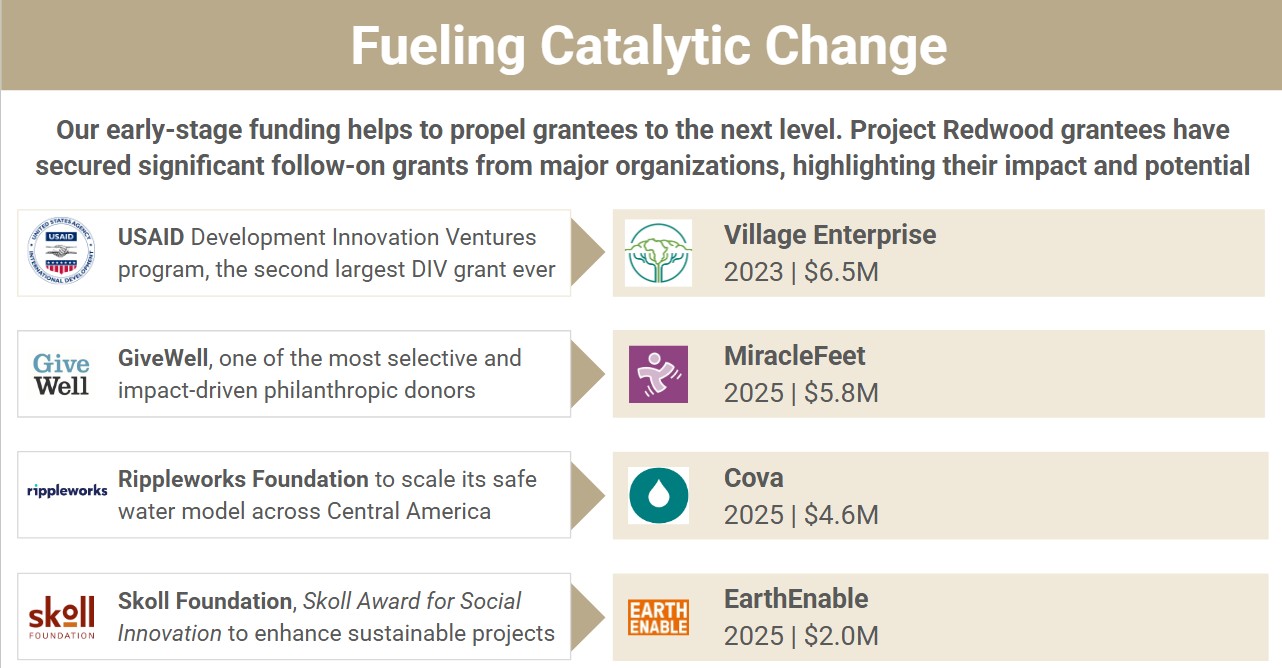
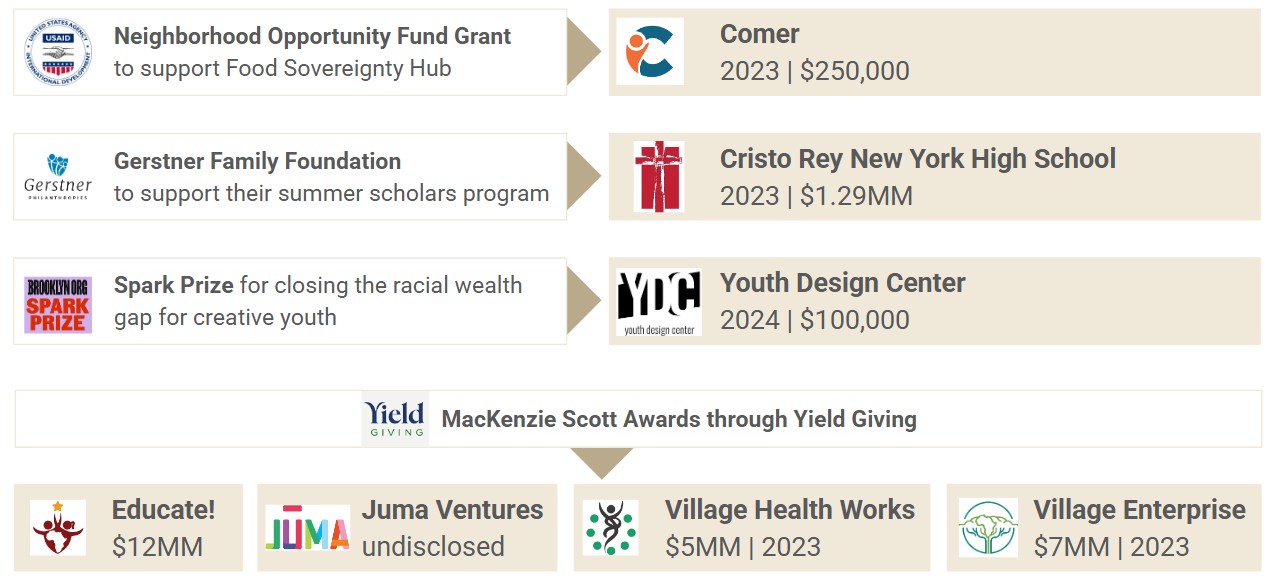
Claudia Lindsey (MBA ’80), Co-chair of the Grant Review Committee, shared how Project Redwood’s grantmaking approach continues to evolve. To date, most grant distribution has focused on awarding funds to support specific projects for early-stage organizations, providing catalytic capital to propel them to scale. Implicitly, the goal was to build multi-year relationships (up to four grants). Project Redwood sought to leverage member expertise and networks to offer non-financial support as well.
A two-year pilot program has demonstrated that unrestricted grants to multi-year grantees have enabled the organizations to address broad-based operational needs that are critical to growth.
Grant-making will shift going forward. Grants will be more overtly catalytic and explicitly intended to be multi-year. Unrestricted funds will be an option for grantees who are mission-aligned with Project Redwood and with whom Project Redwood has built a trust-based relationship. While project specific grants can be assessed based on measures of impact, unrestricted grants used for more organizational development will need qualitative metrics applied. The goal is to resolve outstanding issues and transition in the 2026 grant cycle, clearly communicating this strategic framework.
Looking Ahead: Growth and Sustainability
- Ambassadors, Catalysts of Community: Phil Jonckheer (MBA ’80) and Kristy McHugh, Project Redwood’s Welcome and Engagement Program Manager, reported on the Ambassador Program, an initiative that relies on current members reaching out to fellow alums to expand the memberbase. The goal is to find an alignment of shared values (e.g., a desire to participate in a community-oriented, impact-driven approach to philanthropy) and utilize a personal, storytelling conversation to engage new members. The program now has 14 Ambassadors spanning 9 different GSB classes. Ambassadors meet quarterly to share ideas.
- Culture of Philanthropy: Ritchie Geisel (MBA ’73) introduced Scott Kleinman (MBA ’90), Project Redwood’s newly hired Director of Development. Scott encouraged members to approach fundraising as an act of philanthropy rooted in shared humanity—listening deeply and connecting donors to causes they care about. Attendees practiced these conversations in small-group break-outs. This approach humanizes and personalizes the discussion.
Leadership Transitions and Recognitions
The meeting concluded with recognition of Project Redwood members who serve, and/or recently served in a leadership role.
- Board Transitions: New board members Dan Whalen (MBA ‘80) and Ritchie Geisel (MBA ‘73) were welcomed, and thanks were extended to outgoing board members Laura Fratt (MBA ‘88) and Jorian Wilkins (MBA ‘01).
- Recognition was also extended to those passing the baton as committee chairs: Grant Review Committee: Mike Fitzgerald (MBA ’90); People Committee: Bill Westwood (MBA ’80), Mike Fitzgerald (MBA ‘90); Communications, Marketing, Technology: Stacy Williams (MBA ‘13); Project Redwood Co-Chair: Ken Inadomi (MBA ‘80).
- New chairs stepping up: Grant Review Committee: Rusty Gaillard (MBA ‘01); People Committee: Ken Inadomi (MBA ‘80), Donna Allen (MBA ‘80); Evaluation and Impact Committee: Leanne Scott (MA ‘20); Welcome and Engagement: Gelila Bekele (MBA ‘21); COGS: Dan Judd (MBA ‘19); Executive Committee: Gail Schulze (MBA ‘80); Project Redwood Co-Chair: Mike Fitzgerald (MBA ‘90).
- Members honored Kristi Smith Hernandez (MBA ‘80), a founding member remembered for her commitment and dedication to Project Redwood.
- Special recognition went to Donna Allen (MBA ‘80), named one of 100 GSB Catalysts to be honored at the GSB’s Centennial Celebration.
Co-Chairs Brad Smith (MBA ’95) and Mike Fitzgerald (MBA ’90) reiterated thanks and appreciation to all those changing roles. More broadly, they thanked everyone for attending and actively participating in the day’s programming. A shout-out then went to members and staff who helped coordinate all of the meeting sessions, serving as hosts, moderators and discussion leaders.
Thursday Evening Social
Members and guests capped off the Annual Meeting with a social at Angelica’s, reflecting on shared achievements and the road ahead.
Click here to see more images from the 2024 Annual Meeting.
Let’s Talk!
Curious to learn more about Project Redwood? Connect with a fellow GSBer to see how you can put your skills to work.